

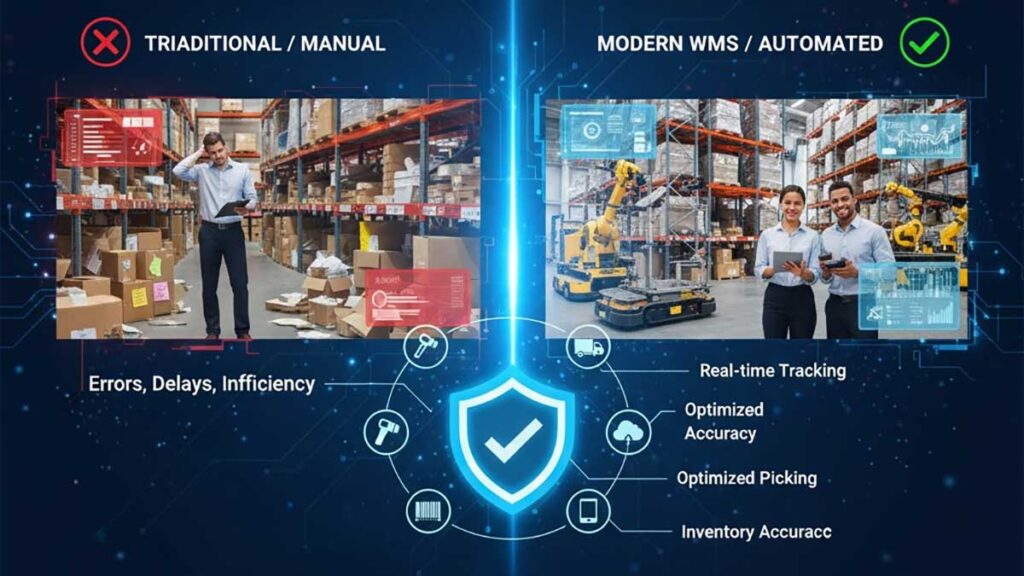
A Warehouse Management System (WMS) is the technology that powers modern fulfillment operations. At its core, a WMS is software designed to manage and track inventory as it moves through a warehouse—from receiving and storage to picking, packing, and shipping.
A strong WMS provides real-time visibility into inventory levels and locations. Every product movement is recorded, allowing fulfillment teams to know exactly what’s in stock, where it’s stored, and what’s available to ship. This level of accuracy reduces errors, prevents overselling, and supports faster order fulfillment.
Beyond inventory tracking, a WMS drives efficiency. It optimizes picking paths, enforces barcode and UPC scanning, and creates standardized workflows that reduce manual processes and human error. Orders move through the warehouse faster and more consistently, even as volume increases.
For brands working with a 3PL, a WMS also enables transparency and control. Clients gain access to dashboards, reports, and integrations with ecommerce platforms and marketplaces. This visibility allows businesses to make informed decisions based on real data rather than assumptions.
In short, a WMS is the backbone of scalable fulfillment. It ensures accuracy, improves speed, and provides the insights needed to grow confidently. When paired with a disciplined 3PL team and proven processes, a robust WMS turns logistics into a strategic advantage—not just a cost center.