

Transitioning your fulfillment operations to a third-party logistics (3PL) provider can be a game-changer for your business. It can reduce operational headaches, free up internal resources, and give you the flexibility to scale quickly. However, the success of this transition depends largely on how well your business is prepared beforehand. Without proper planning, even a reliable 3PL can struggle to meet expectations, which can lead to delays, errors, or unexpected costs.
Preparation involves more than just selecting a partner—it’s about ensuring your inventory is organized, your systems are ready, and your internal team understands their roles. It also requires clear communication with your 3PL about current processes, order volumes, peak seasons, and any special requirements. By taking the time to organize your data, document your workflows, and forecast demand, you can ensure a smoother onboarding process, faster time-to-fulfillment, and a stronger partnership from day one.
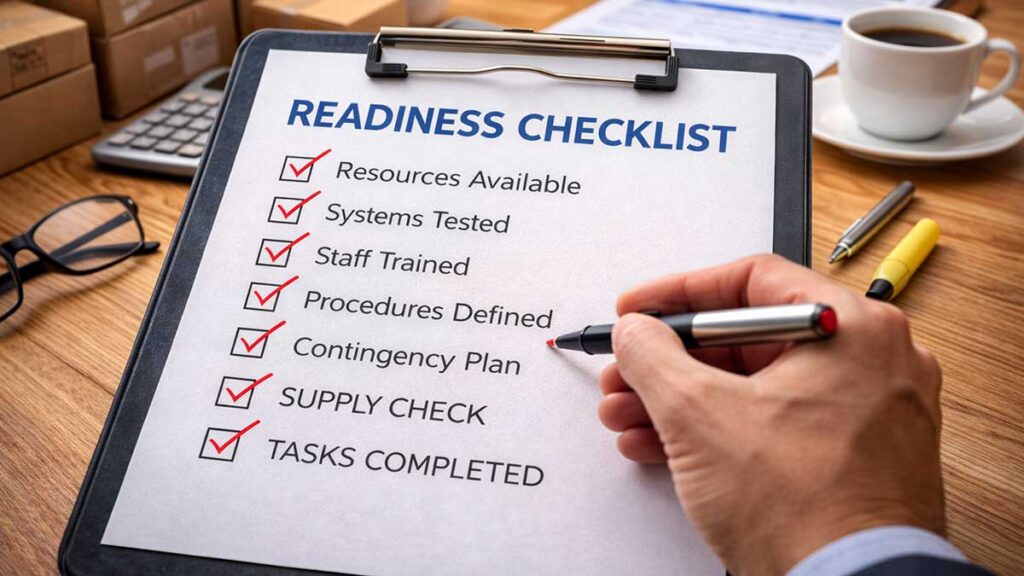
The following checklist highlights the key areas your business should focus on before transitioning to a 3PL. Addressing these items upfront sets the stage for a seamless handoff and positions your company for growth.
- Clearly defined SKUs and inventory data
Organize and verify product information—including SKUs, dimensions, weights, and packaging details—to ensure accurate receiving, storage, and picking at the 3PL. - Accurate order history and volume data
Compile historical order data and forecasted volumes to help the 3PL plan staffing, storage, and shipping capacity. - Identify seasonality and growth potential
Highlight upcoming peak seasons, promotions, or anticipated growth so the 3PL can allocate resources and avoid disruptions. - Organize fulfillment processes and documentation
Document how orders are currently processed, packaged, and shipped, including any special handling instructions, so the 3PL can replicate your standards. - Prepare inventory for transfer
Conduct a full inventory audit and ensure stock is packaged, labeled, and ready for shipment to the 3PL warehouse. - Determine technology and integration needs
Confirm which sales channels, marketplaces, or internal systems will integrate with the 3PL and provide access or API credentials in advance. - Set clear expectations and KPIs
Define desired service levels, shipping speeds, and success metrics. Communicate expectations upfront to align on performance and avoid misunderstandings. - Plan internal communication and responsibilities
Decide which internal team members will manage the transition, monitor progress, and act as the primary point of contact with the 3PL.
Smooth Transitions Start with Preparation
Proper planning ensures your move to a 3PL is efficient, predictable, and stress-free. With organized inventory, clear processes, and open communication, you’ll maximize the benefits of outsourcing fulfillment.